You Can Grow Wine Cap Mushrooms in the Garden
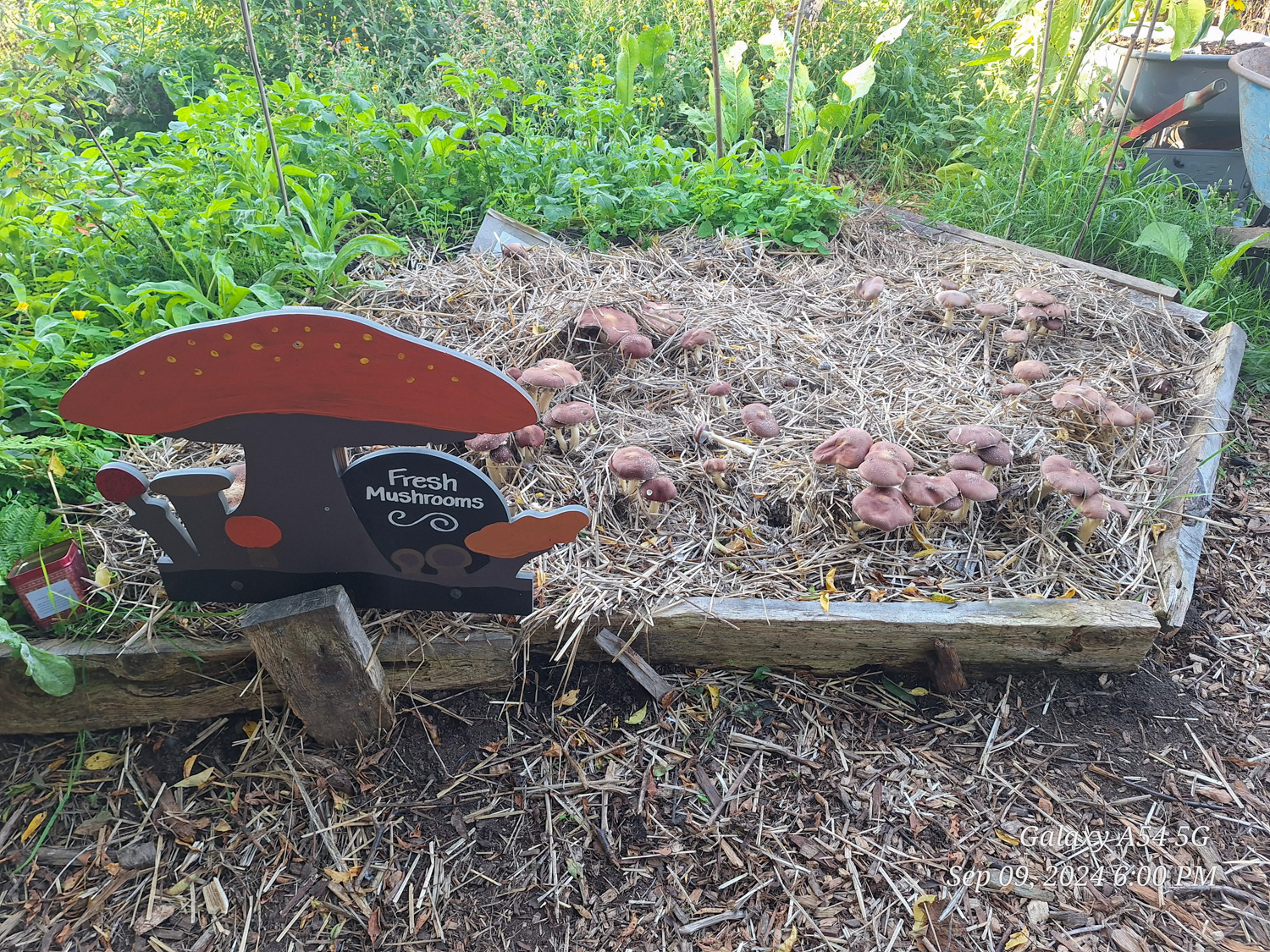
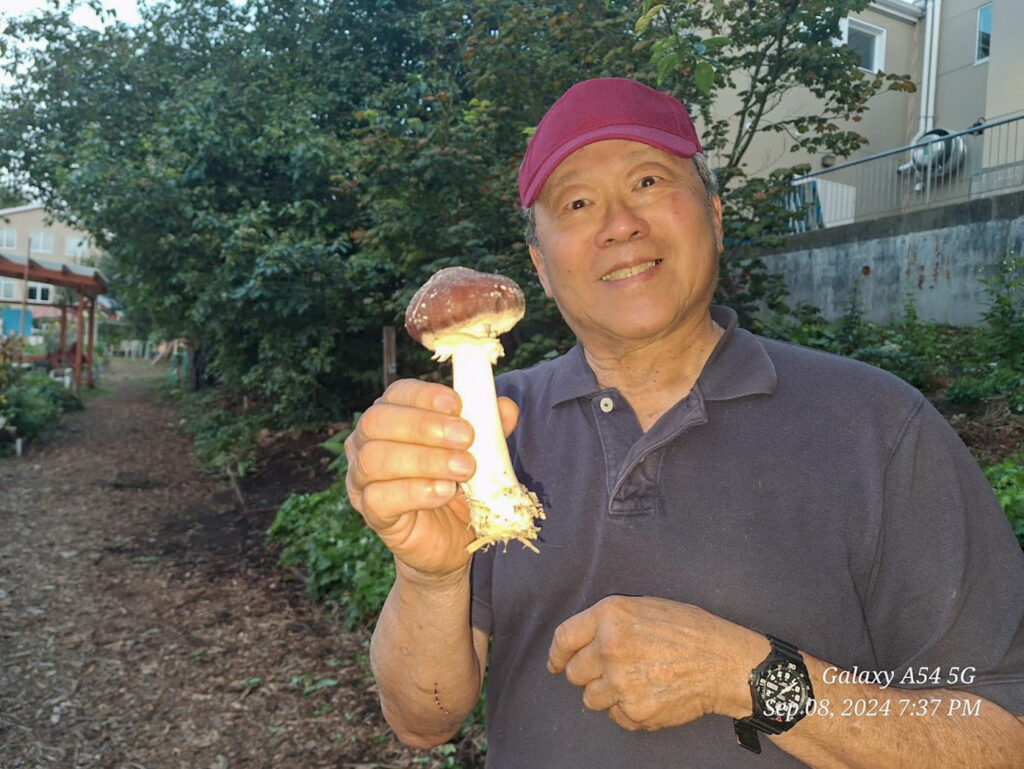
We recently started growing Wine Caps (Stropharia rugoso-annulata) outdoors at our community garden, the Picardo Farm P-Patch. Also called Garden Giants or King Stropharias, they are medium- to-large sized “meaty” mushrooms with attractive deep burgundy caps, violet-gray gills, and white stems.
They’re easy to grow and come up in abundance. They are also delicious and can be substituted in recipes calling for creminis or portabellas. Wine Caps are usually not available for purchase in stores because they are fragile and mature very quickly, so it’s a treat to harvest them in prime condition and cook them up in your favorite dish.
Wine Caps also have benefits to the garden ecosystem. Because they break down woody matter, they contribute to production of organic matter which improves soil fertility and health. They help bees to fight off infection and disease so Stropharia extracts have been used by some beekeepers to prevent colony collapse disorder.
The best time to start a bed is usually in early spring or fall, but this year we planted our bed in early June. We selected a 4×6 foot raised bed under the shade of an elder plum tree where our annual veggies struggle to get enough light.
We started by removing the first six inches of soil and then applied a layer of cardboard to suppress weeds and eventually feed the mushrooms. Next we added 2-3 inches of well-weathered wood chips collected from nearby paths, followed by a 3 inch layer of straw from a bale that had been left out in the elements for several months.
Then we inoculated the bed with Stropharia mycelium that was grown on hardwood sawdust which we purchased from Cascadia Mushrooms in Bellingham, WA. We divided the mycelium into 1-2 inch chunks, placed them about a foot apart on the bed, and scattered the remaining bits of mycelium in between.
We followed that with another layer of straw and wood chips, then covered everything with a 3-4 inch layer of fresh straw as top mulch, making the entire bed of straw, mycelium and chips about 12-14 inches deep.
We watered the bed thoroughly, keeping the bed moist but not soggy for the next 3-4 weeks.
To confirm the mycelium was spreading we occasionally poked into the bed and looked for the white, ropy strands of mycelium in the substrate. Ultimately, the colonies of mycelium kept on growing until they all linked up with each other and the bed essentially became a single organism!
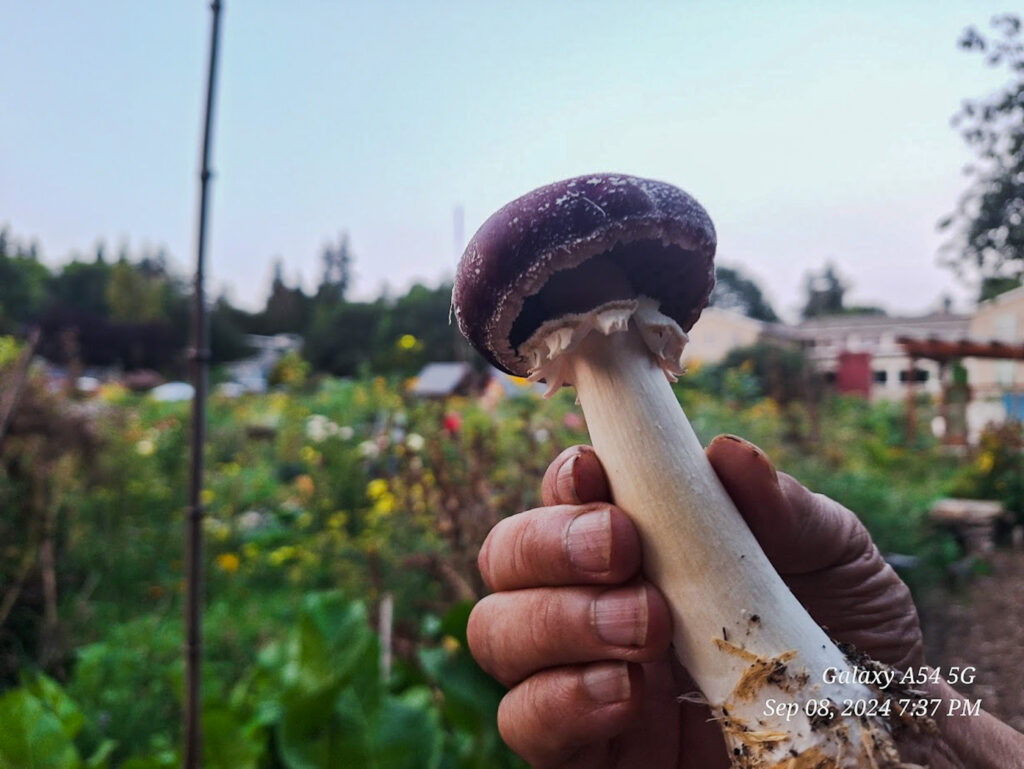
The August, rains and a dip in temperatures must have triggered fruiting as by early September we saw a substantial flush of several pounds of mushrooms. On the first day, the buttons were an inch or two in diameter and barely visible through the top layer of straw. One or two days later they had doubled or quadrupled in size. Their caps opened and they were ready for harvesting.
After another couple of days they matured and started releasing millions of sooty black spores! Slugs, squirrels and other critters were also attracted to the unexpected bounty so we weren’t surprised to see several mushrooms missing part or all of their caps. Good thing there was plenty to go around!
Usually, after a rest period of 3-4 weeks there is another substantial flush of mushrooms, so we’ll be watching for a repeat performance in October.
At the end of the year we will heavily mulch our bed with more straw, wood chips, twigs and dried leaves. If the mushroom mycelium survives the winter it will produce for us again next year.