Easy Ways to Compost in Your Garden This Fall
Have piles of garden debris after harvest? You can compost it right in your garden beds with these simple methods.
Composting in the garden helps recycle nutrients in the soil and it keeps useful organic matter on site, rather than relying on fossil fuels to haul it away to commercial composting facilities. Gardeners can also rest assured of the quality of inputs to the compost they’ll return to their precious garden soil by building it themselves.
Small Space Composting Methods


Rodent-Proof Digester Options
One of the biggest deterrents to composting in urban spaces is the concern about attracting rodents. Digesters are a smart solution because they have a rodent-proof basket buried in the garden bed where the soil biology can feed on garden debris and food scraps, but burrowing rodents cannot. One do-it-yourself option is to drill quarter inch holes in the bottom and lower sides of a metal trash can and bury it in the garden. Digesters are especially useful near perennial plantings where they can receive inputs for recycling year round.

Quick Wire Mesh Cage
This quick and easy solution to tidies up the garden plot while keeping habitat for beneficial insects and decomposers. Simply set up 3-4 sturdy stakes and wrap wire mesh around them to form a cage that fits the space. Then pack in any garden debris you have and watch for small birds who may forage in these piles.
Bury It
Reduce the visual impact of the compost pile, compost woody debris that takes longer to break down, and create an opportunity for planting cover crops or overwintering veggies. This can be useful for small garden beds or can be scaled up to create a sponge garden or hugelkultur style planting. The buried compost pile helps regulate moisture and temperatures beneath the garden bed, which can support plants throughout the year.
Passively Decomposing Piles
Garden debris that takes a long time to break down, like weeds, berry canes and tree prunings can be great habitat for beneficial insects over a long period of time. Avoid adding food scraps to keep rodents out of passive compost piles.
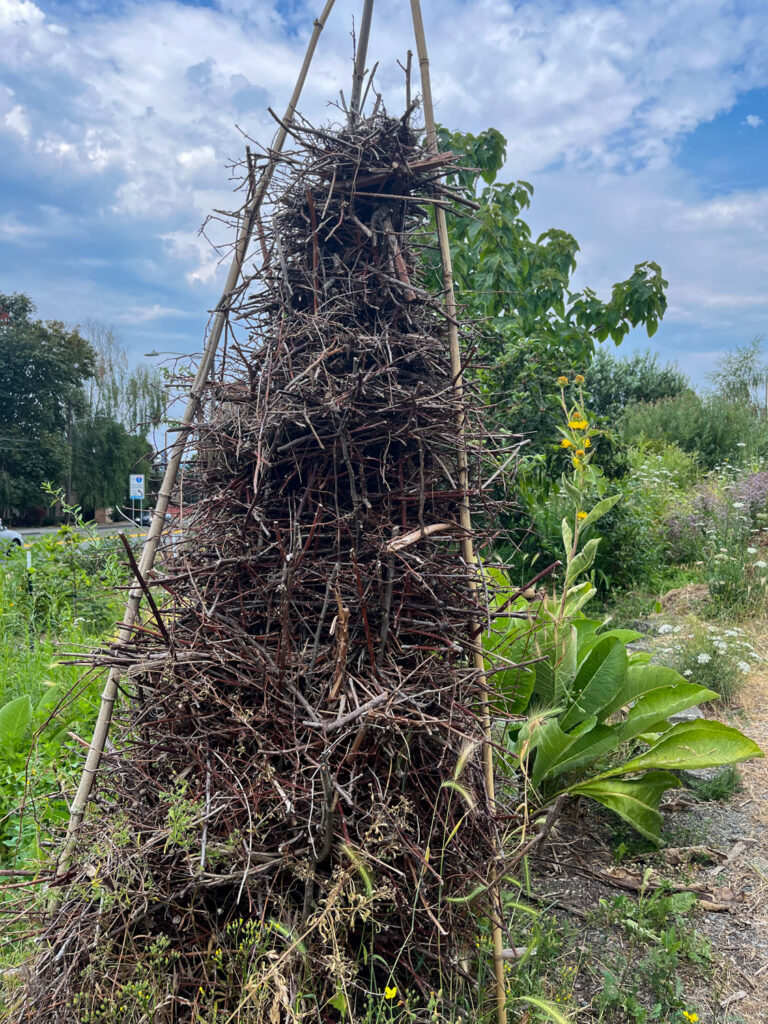

At Beacon Food Forest, they built a creative solution that supports wildlife and turns woody debris into art.
Piles of resilient plants such as quack grass or buttercup often regenerate themselves when combined with other compostables, but piled above the soil they will slowly break down and provide some habitat in the meantime.
On a small scale, this might look like pulling up all the quack grass roots to leave on top of cardboard to solarize like this gardener did.


Or it can be kept a bit more tidy using a bin. The “Seattle Composter,” the round green bin pictured here is great for passive composting because burrowing bumble bees can easily navigate the small holes and the lid helps maintain a warm, dry environment for them.
At Rainier Beach Urban Farm & Wetlands, passive compost piles take the large scale form of windrows. Tough plants like bindweed and blackberry are piled up to slowly break down.
Hot Compost
Making “hot” compost, which breaks down quickly and takes care of seeds, can be a great community building opportunity, fun citizen science, and a solid workout, but it may be an insurmountable goal for many gardeners. When gardeners create a recipe of “greens” (nitrogen rich materials) and “browns” (carbon rich materials), adjusting the moisture as necessary and periodically turning or aerating the compost, cycles of beneficial microbes and other tiny decomposers break down the organic material and generate heat in the process.

Ready to Get Your Hands Dirty?
Learning composting is easier when you do it with others. Join us for one of our hands-on composting classes where you’ll see these methods in action, ask questions, and connect with fellow gardeners.
Our classes cover everything from small-space solutions to hot composting techniques. You’ll leave with the confidence to start composting right away – no matter what size garden you have.